In October 2025 I flew to South Korea to speak at HE-VITA 2025, the International Symposium on Natural and Traditional Medicines at Kyung Hee University. It was the first time I had been invited to give a session talk outside Bangladesh. I stayed about five days. It has been almost a year, and I still open these photos more often than I expected to, so I am finally writing the trip down.
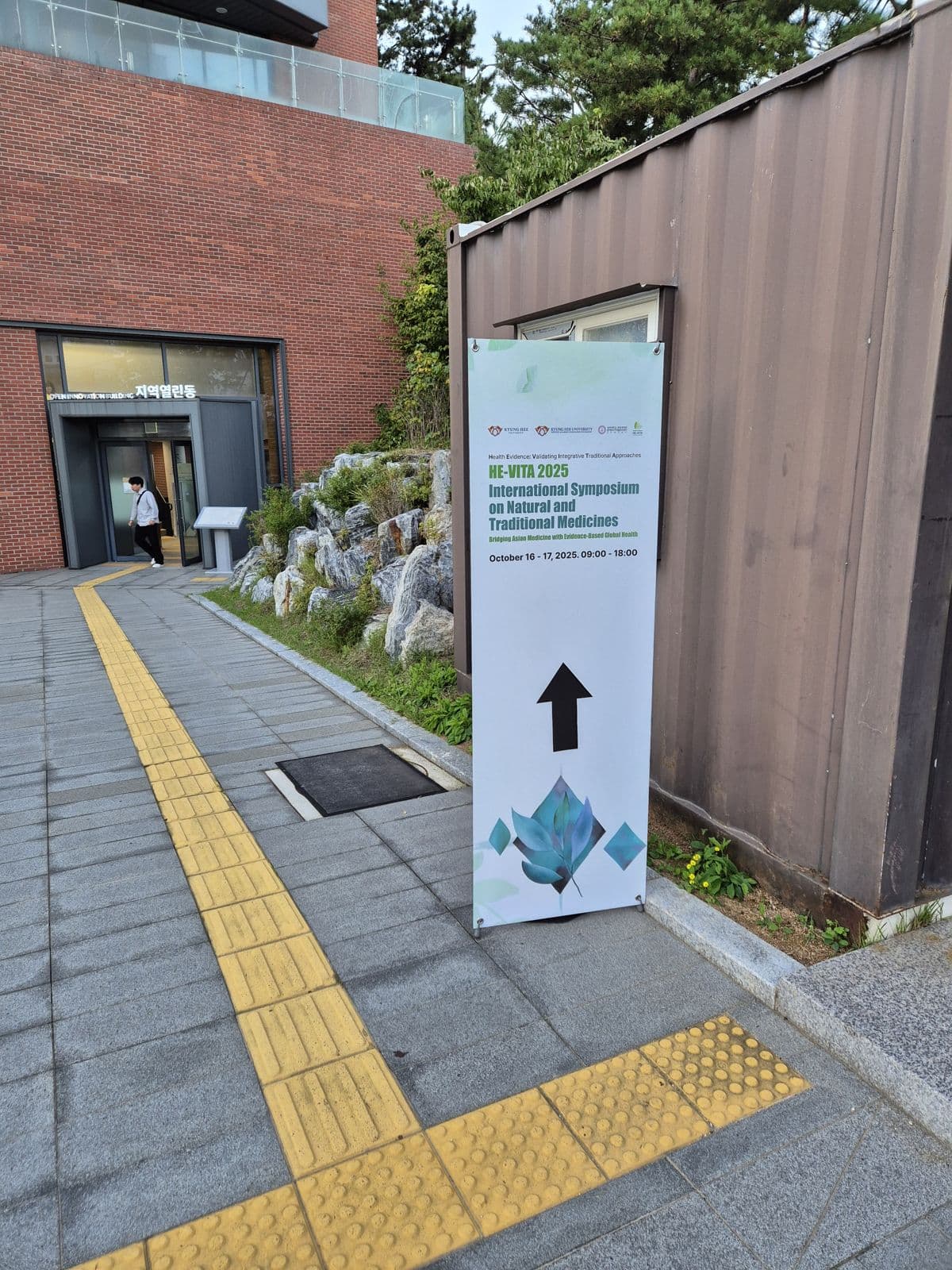
What HE-VITA is
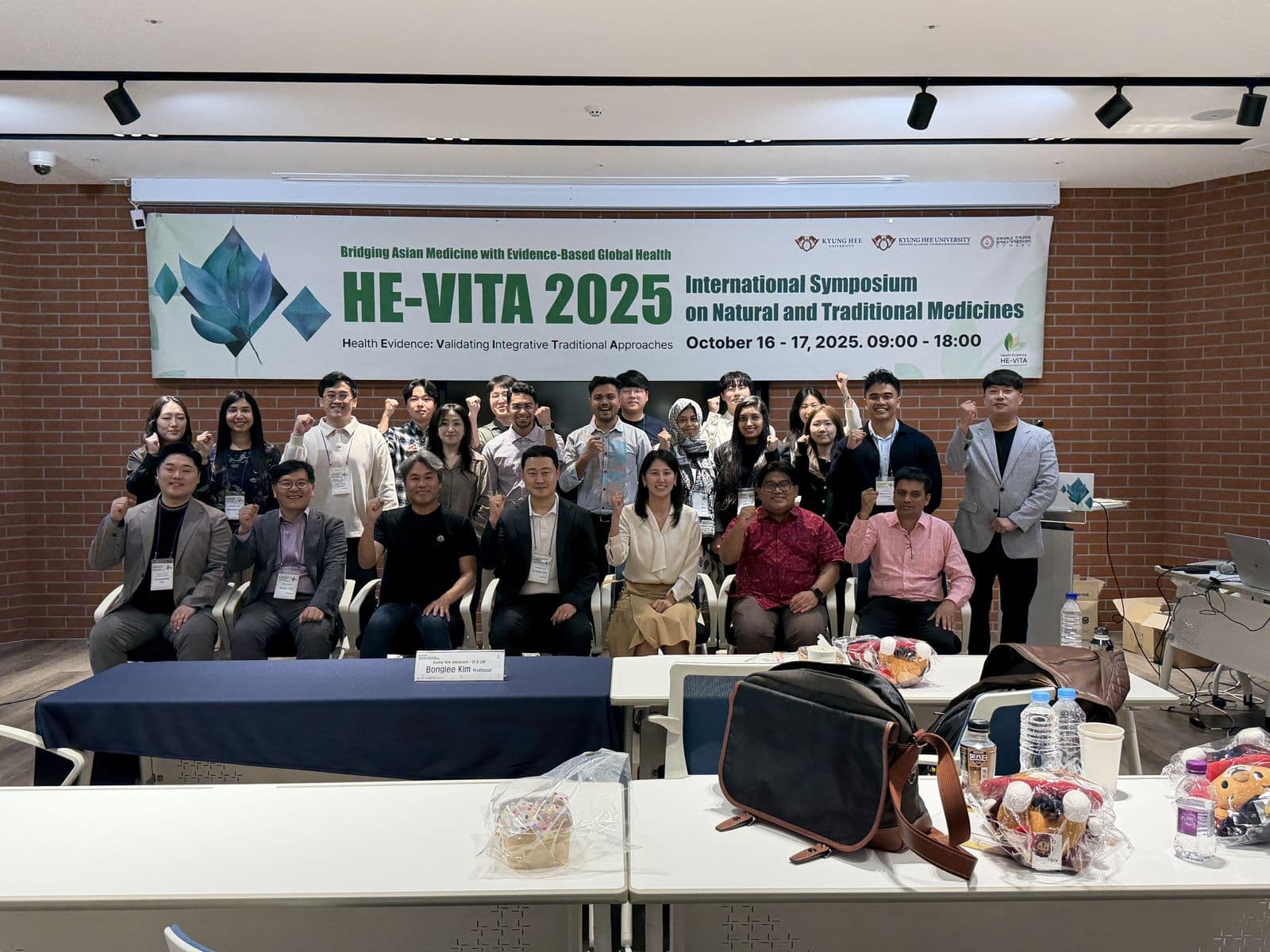
HE-VITA stands for Health Evidence: Validating Integrative Traditional Approaches. The symposium ran on October 16 and 17, with the theme "Bridging Asian Medicine with Evidence-Based Global Health". Kyung Hee University hosted it, and Professor Bonglee Kim of the College of Korea Medicine gave opening remarks from the podium.
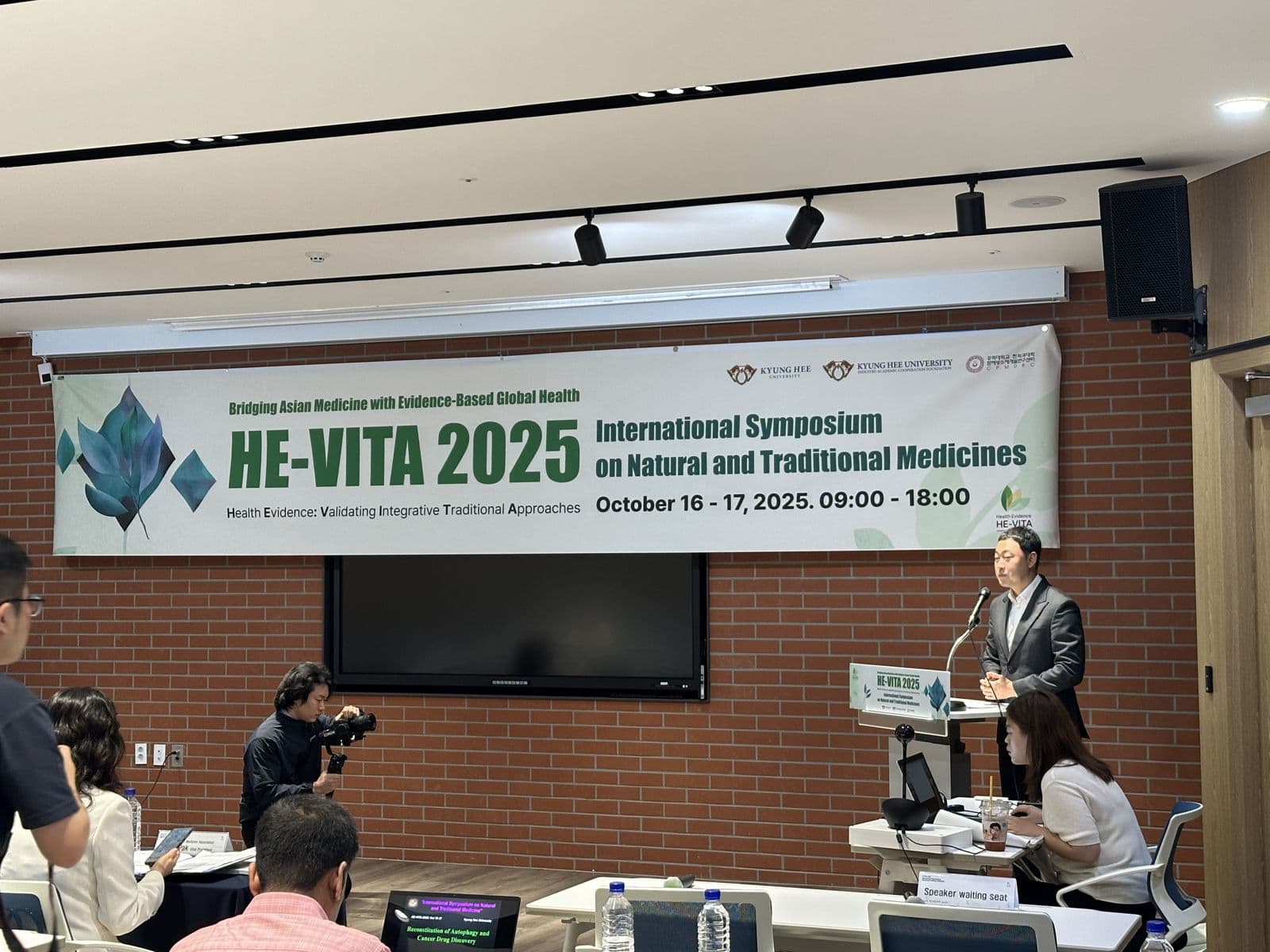
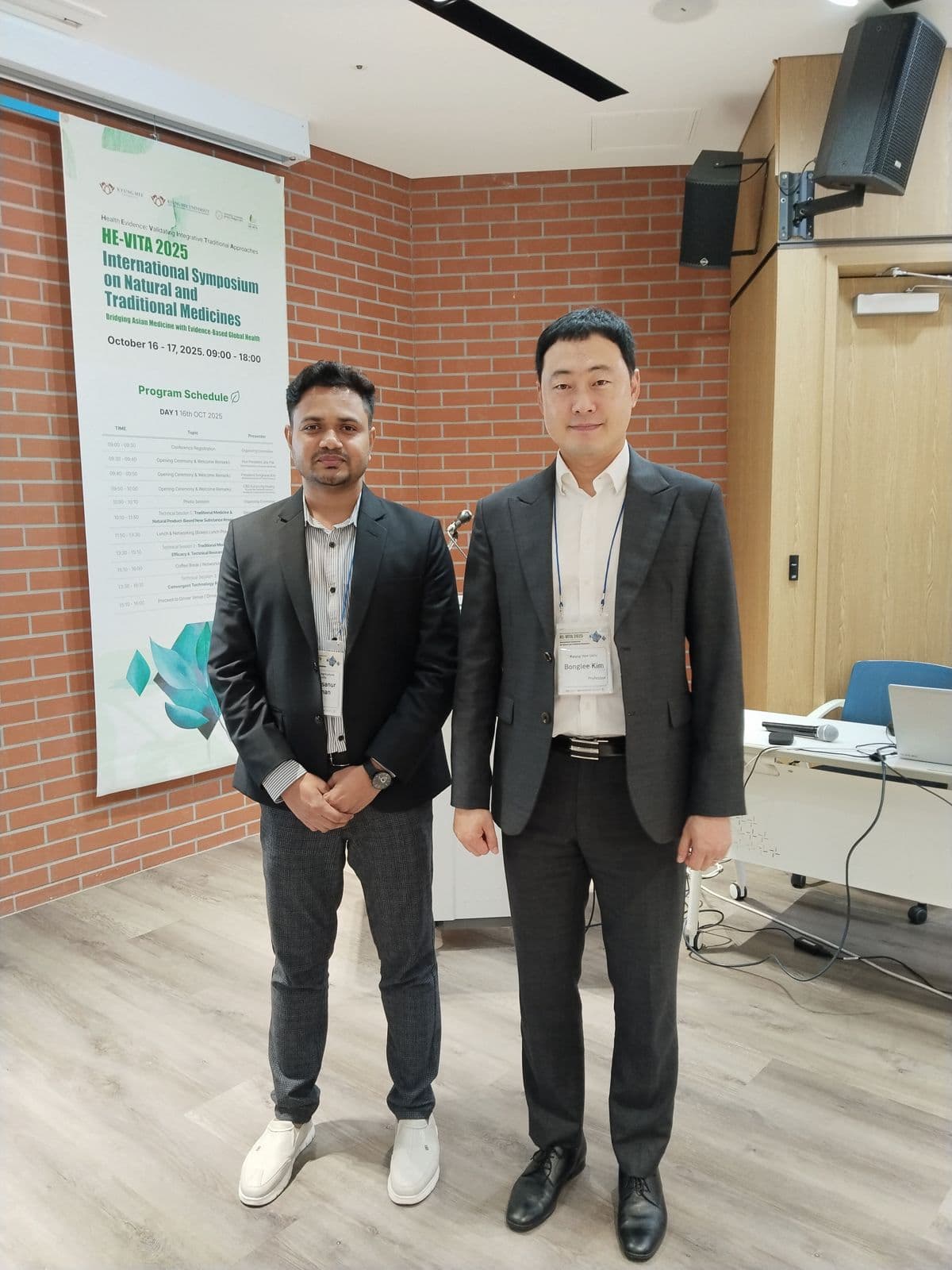
I will say it plainly: being invited as a session speaker at an international symposium felt big to me. Researchers came from several countries, and the program was full of people who have worked on natural products and traditional medicine for longer than I have. I was on that list too, as the speaker for my own session, and I wanted to deserve the invitation. The photo with Professor Kim next to the program poster is the first picture where I look settled.
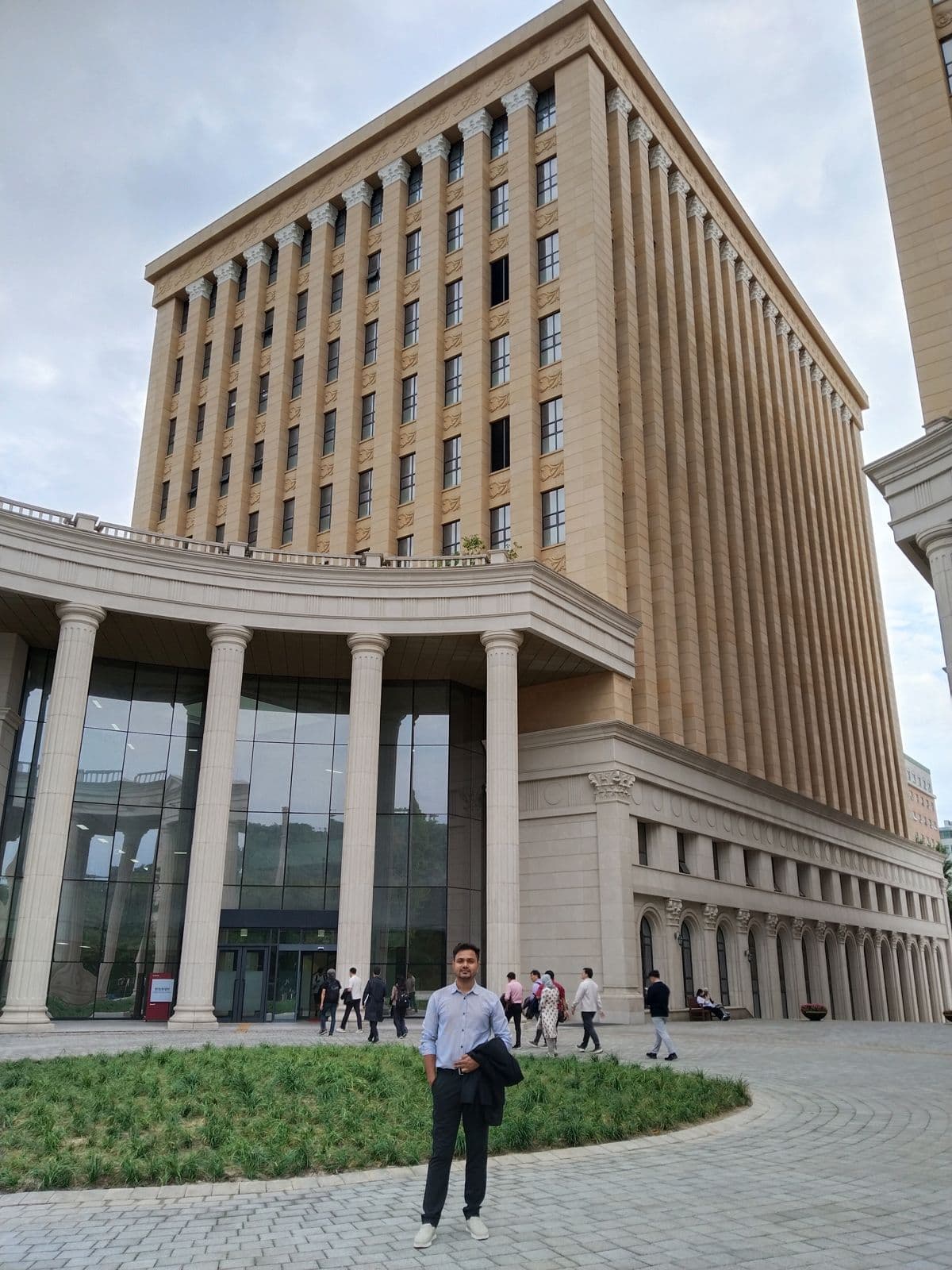
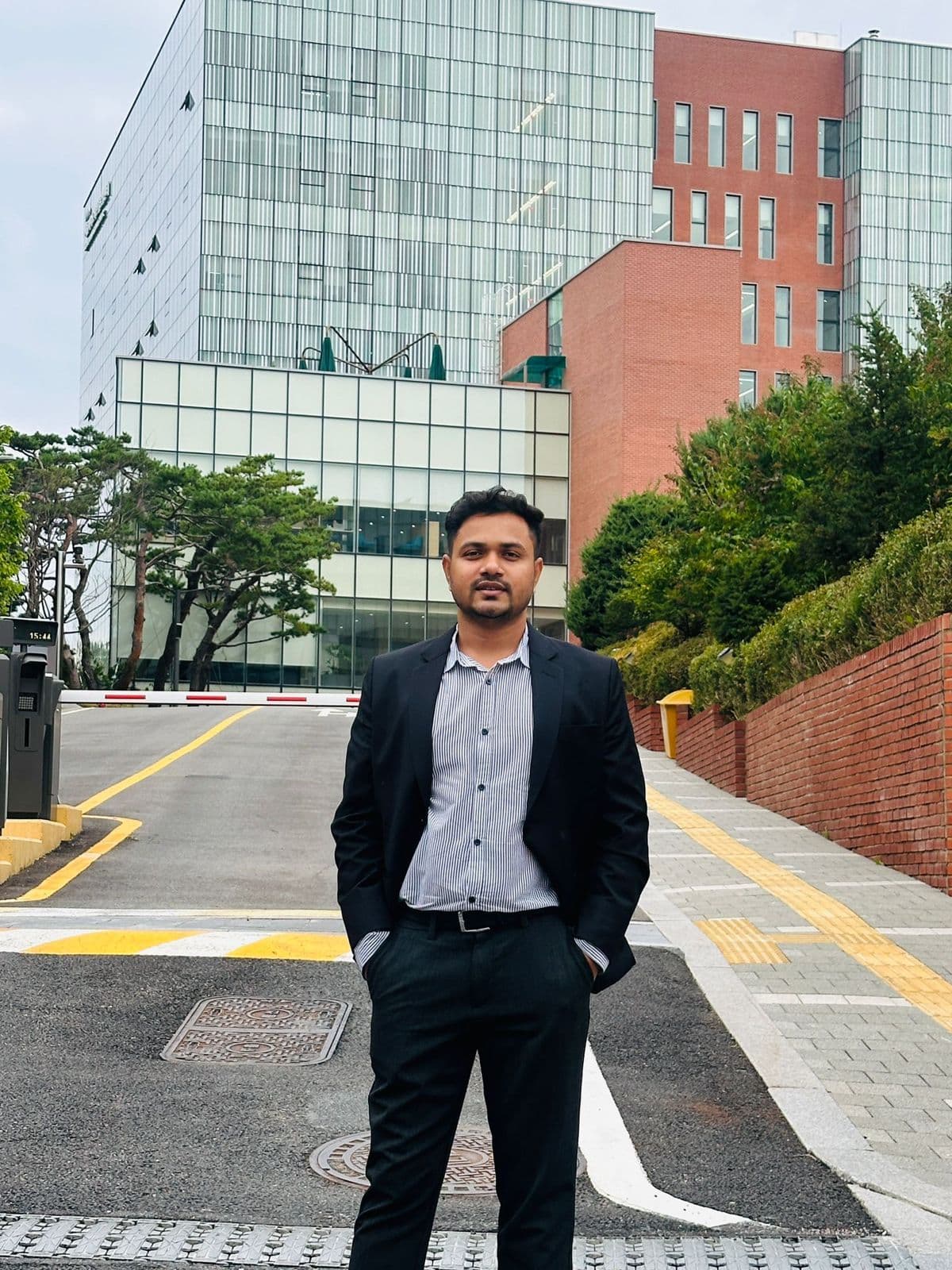
While visiting Professor Kim's lab I stood in front of the main building of Kyung Hee University's Seoul campus.
The other talks
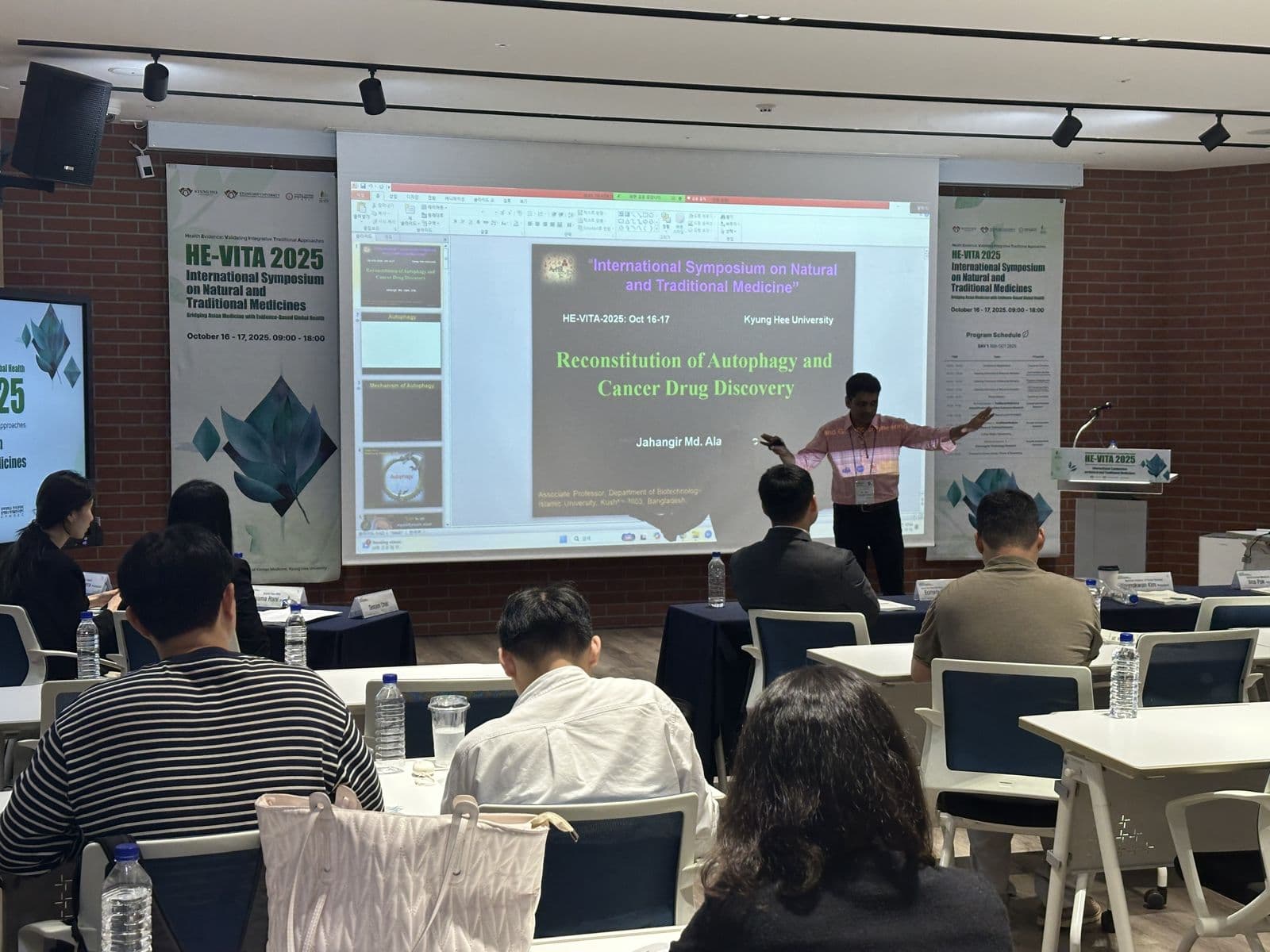
A talk that stayed with me was by Dr. Jahangir Md. Alam from Islamic University, Kushtia, on reconstituting autophagy for cancer drug discovery. He is a Bangladeshi researcher, and seeing a fellow countryman hold a room of Korean and international scientists made the whole event feel a little closer to home. Cancer and drug discovery are the topics my own work sits nearest to, so that session mattered to me.
Another talk I followed closely was by Dr. Rony Abdi Syahputra from Universitas Sumatera Utara in Indonesia, titled "Integrating Bioinformatics into Herbal Medicine: From Herbal Genomics to Precision Therapy". His session covered molecular docking and molecular dynamics, the same methods I rely on in steps three and four of my pipeline, so I wanted to ask him something.
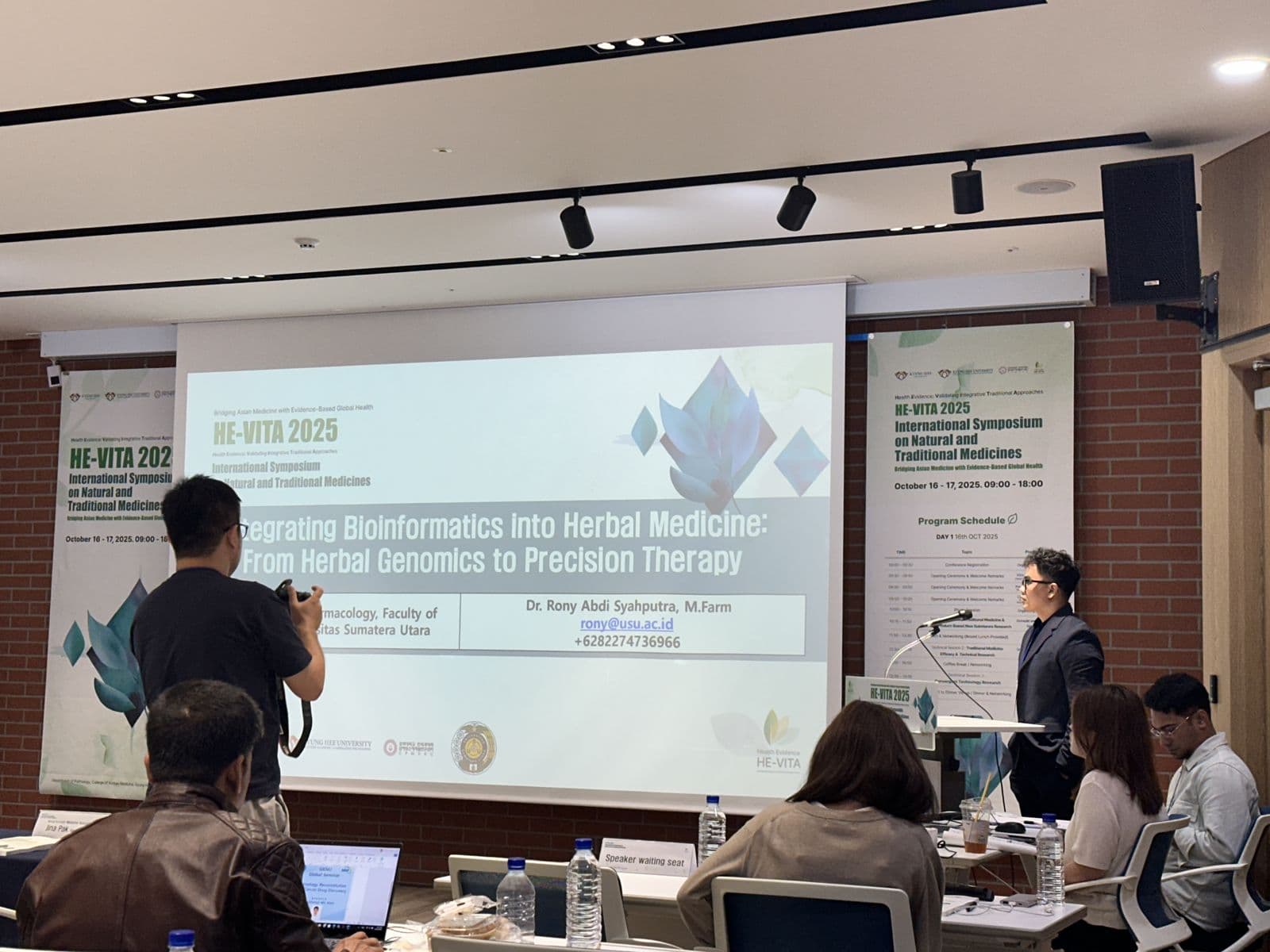
I asked about the compound and target pair he showed at a specific molecular dynamics simulation time, measured in nanoseconds. How can we be sure the binding interaction will still be intact after that point, and what would the next phase be? I also asked whether there is any way to make a pipeline like ours more certain that a complex that looks stable at the end of a simulation will stay that way. It is a question I ask about my own work too, so it was useful to put it to someone using the same kind of analysis.
My session
My talk was titled "Computational Deconstruction of Traditional Medicines: A Bioinformatics Pipeline for Uncovering Multi-Target Therapies". I presented it from Dr. Hannan's lab at Bangladesh Agricultural University.
The photo below shows what I saw before I went up: a desk with a name card that says "Speaker waiting seat". That card made it real. I was nervous, and I trusted the slides to carry me.
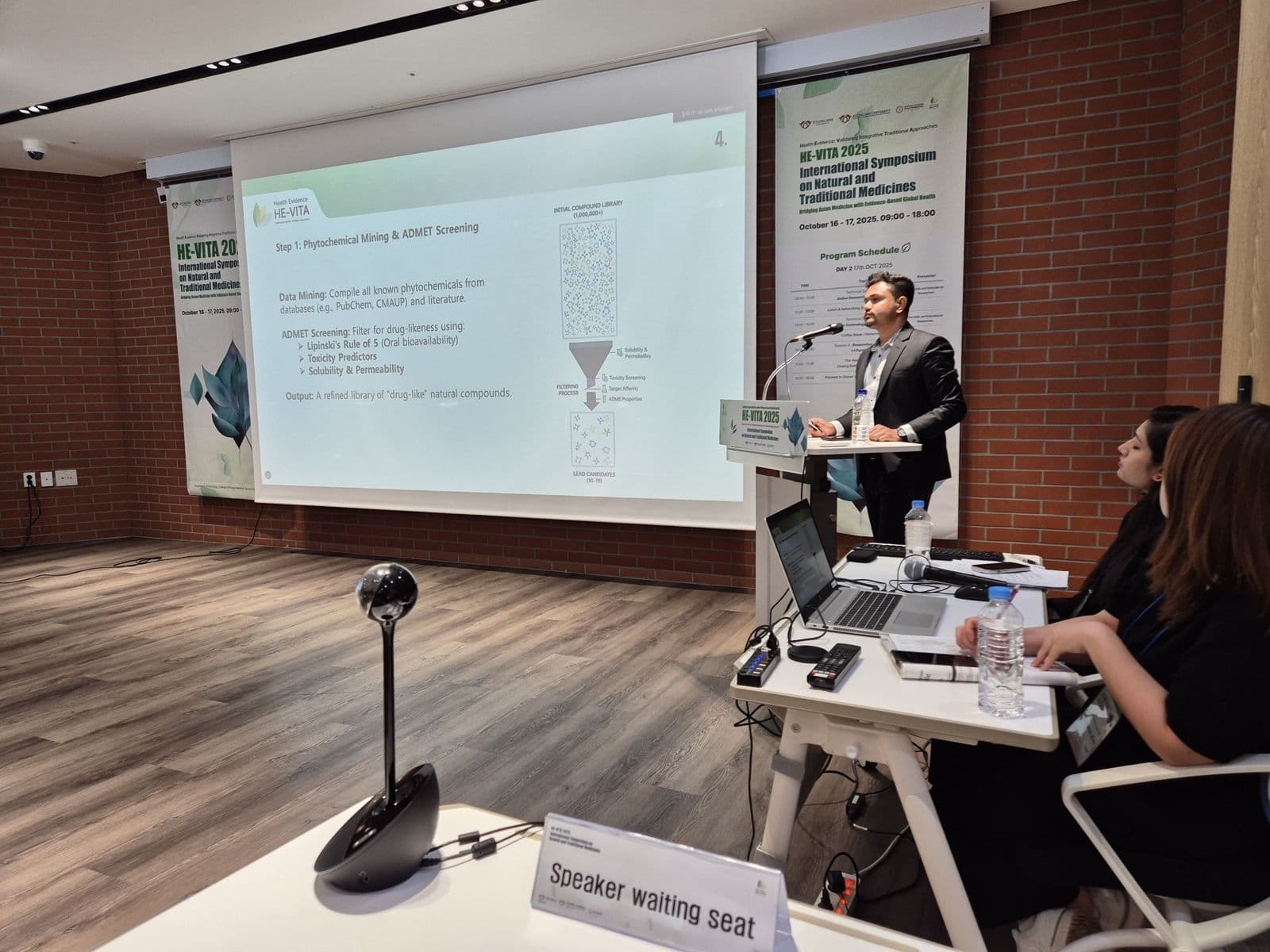
The idea behind the talk is simple to say. Diseases like cancer, Alzheimer's and metabolic syndrome involve whole networks of genes and proteins, yet most drug discovery still follows "one drug, one target". Traditional remedies such as Ficus hispida, Caesalpinia sappan and Shankhpushpi have always been mixtures that touch many pathways at once. What we lack is a systematic way to say which compound in the mixture acts on which target. So the talk walked through a five step pipeline: mine the phytochemicals and screen them for drug-likeness and ADMET properties, build a network pharmacology picture to find targets, dock the compounds to those targets, check the best ones with molecular dynamics, and then hand a short list to the wet lab for in vitro and in vivo validation. The funnel on my first step slide goes from a library of more than a million compounds down to ten or fifteen lead candidates, and that image is the one I pointed at most.
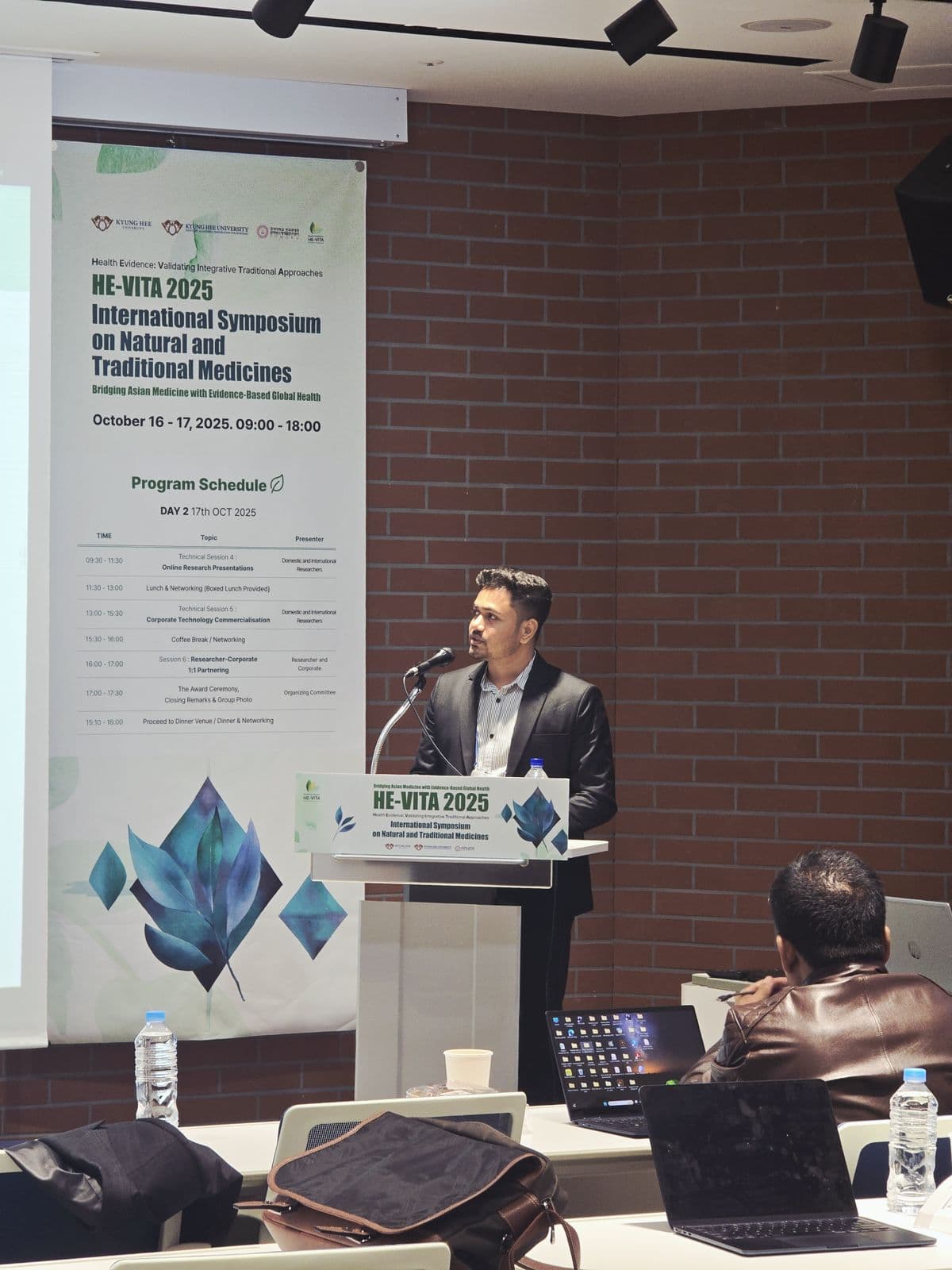
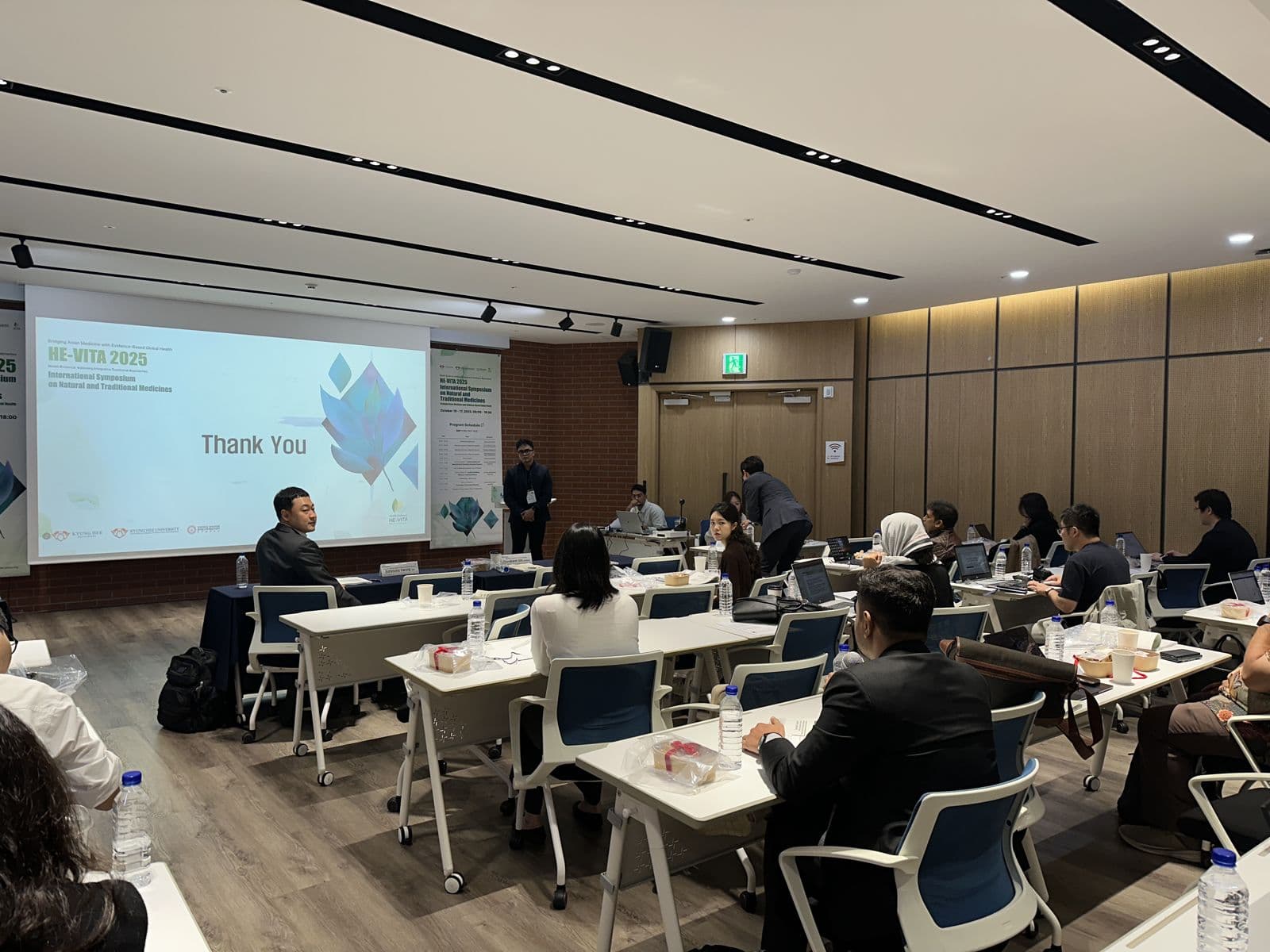
Once I started talking, the nerves settled. The last slide thanked Professor Bonglee Kim, Dr. Md. Abdul Hannan, Dr. Md. Ataur Rahman of Karmanos Cancer Center at Wayne State University, and Dr. Md. Jamal Uddin of ABEx Bio-Research Center, and I meant every name on it.
The award
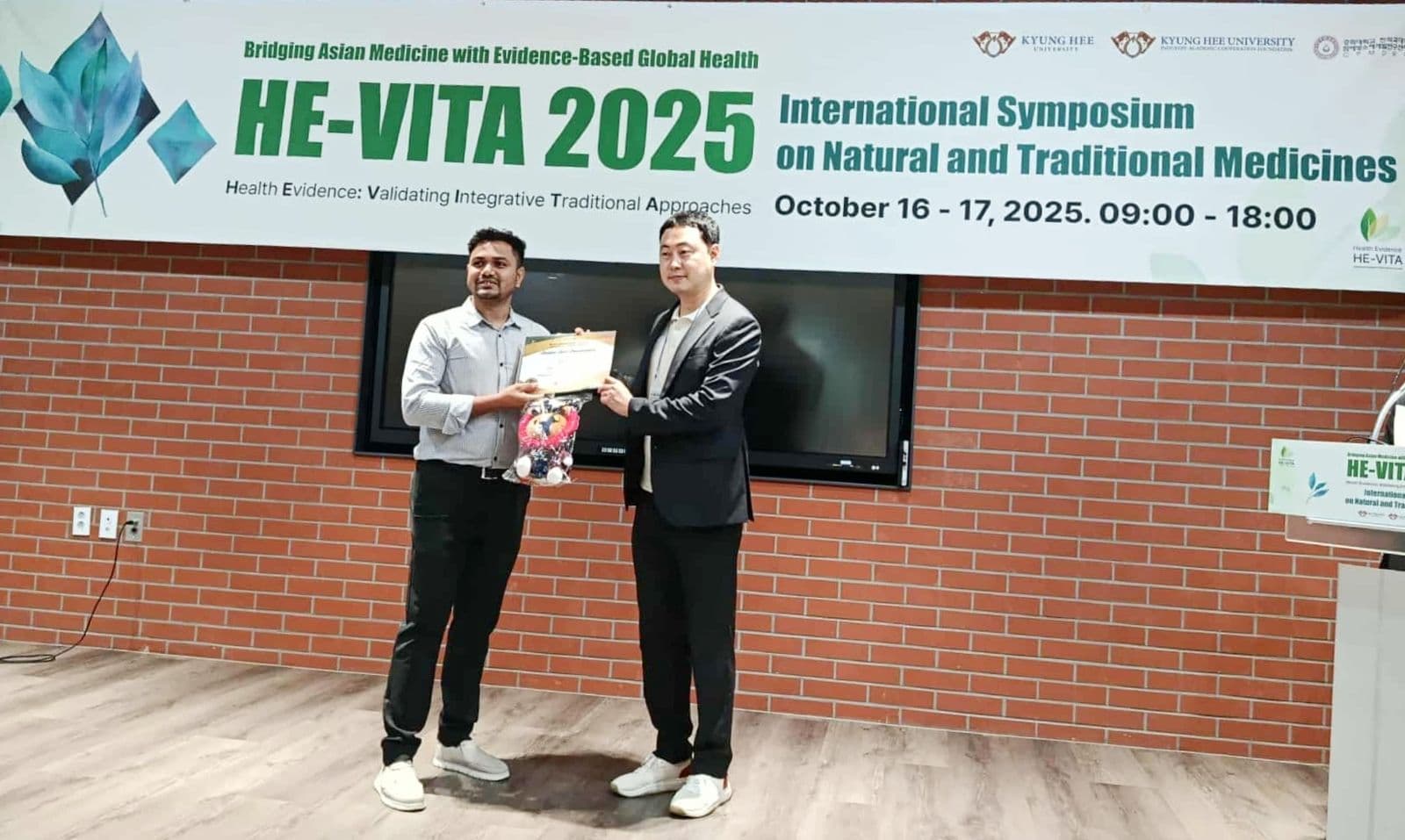
I was handed a Session Best Presentation certificate, together with a plush of Kyung Hee University's lion mascot, dressed in a graduation gown. I was not expecting a prize. I came to show a pipeline and learn from the room, and I could not stop smiling.
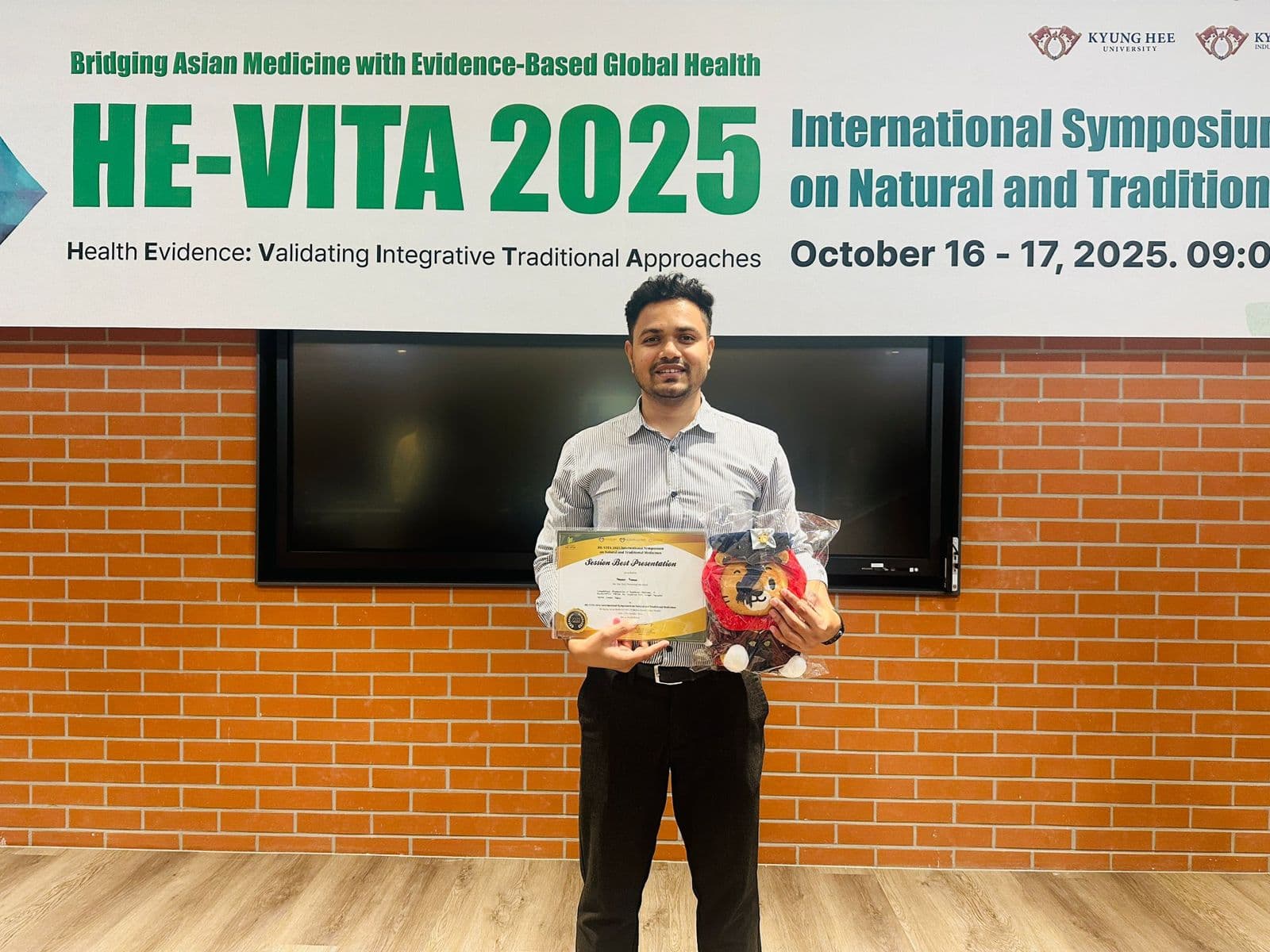
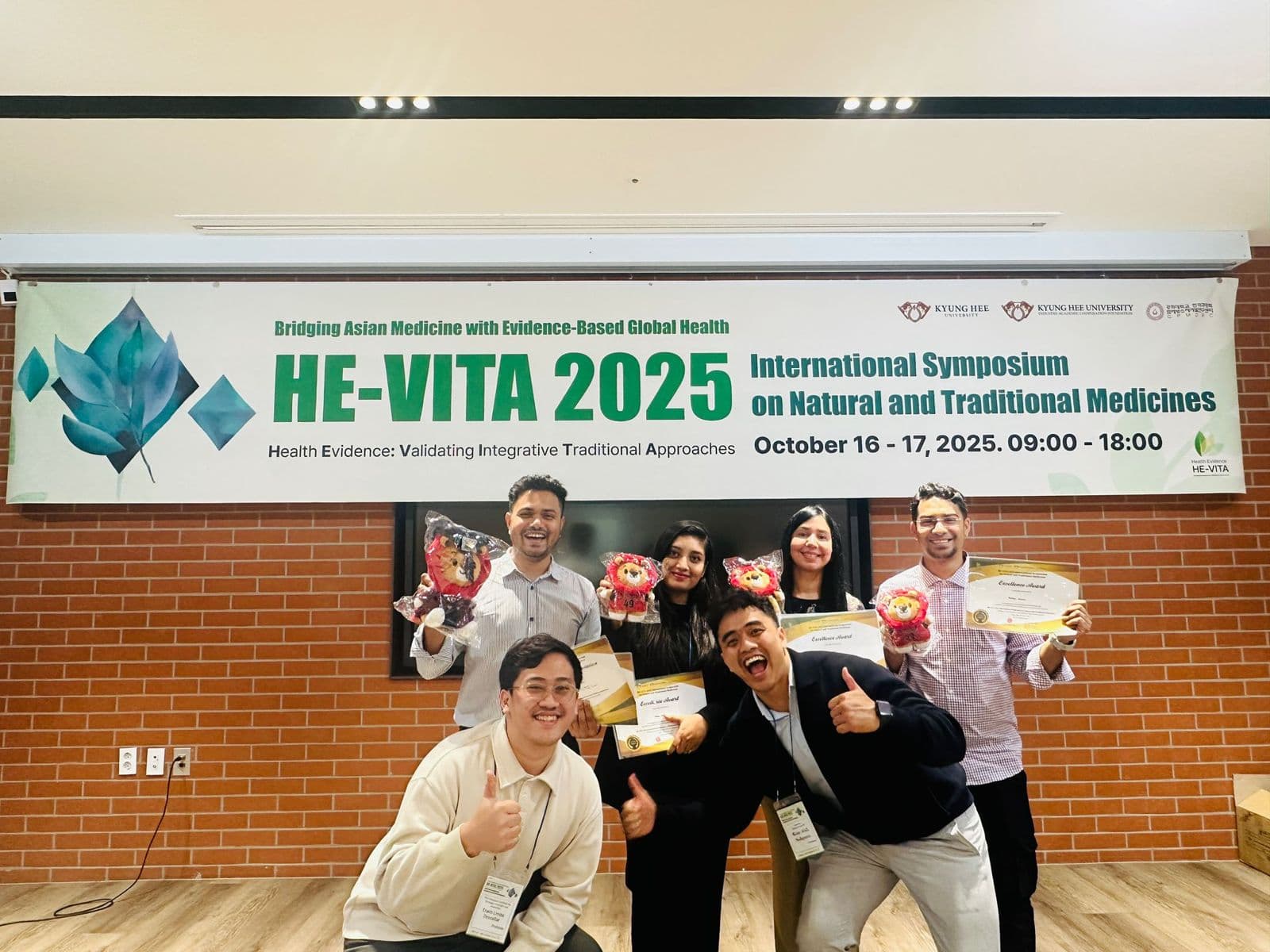
Other session winners received Excellence Awards, and we ended up taking a loud, happy group photo with all our certificates and lion mascots.
The people
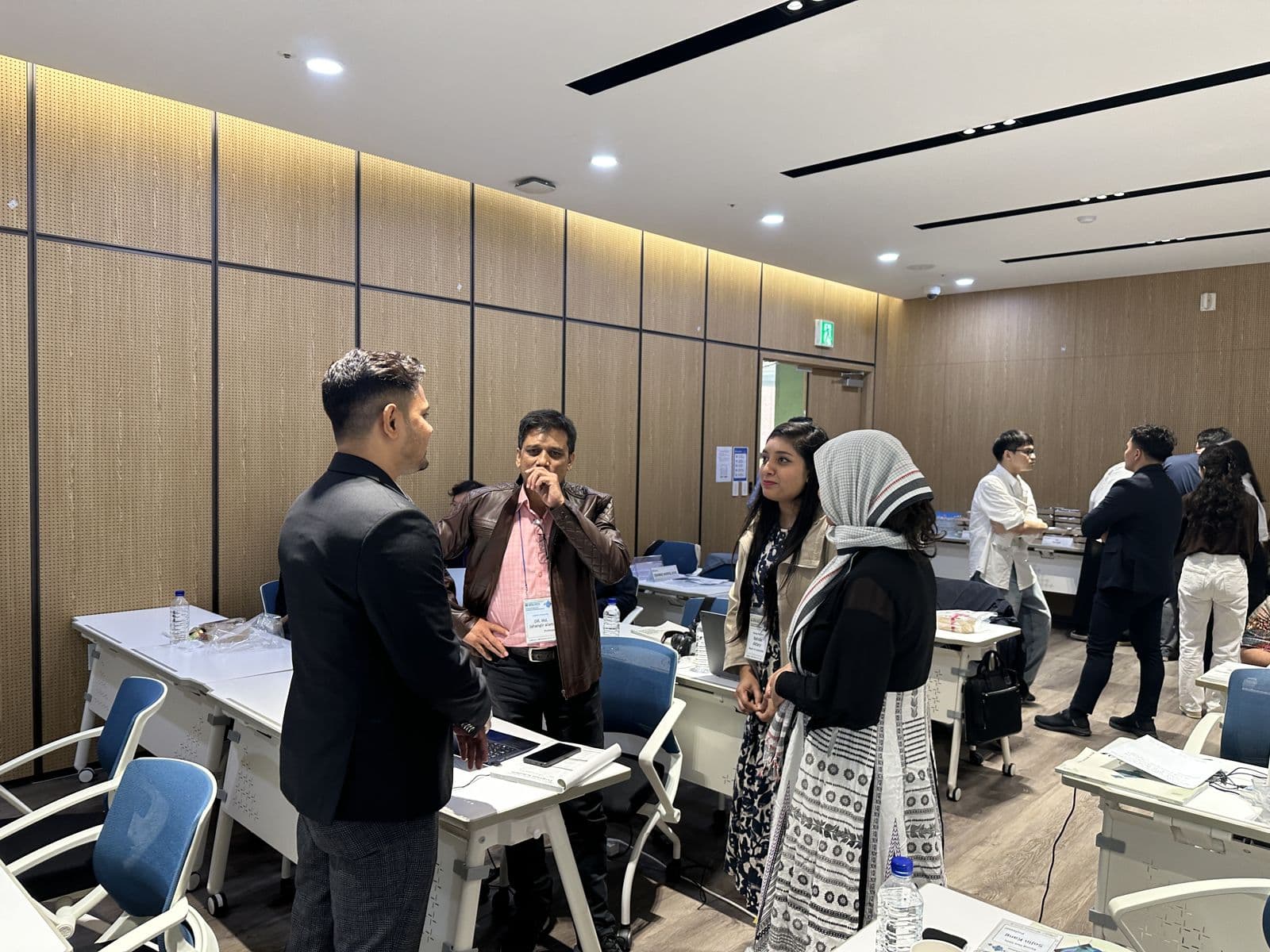
The talks were the reason I went, but the conversations are what I think about most. Between sessions I stood talking with Dr. Jahangir and two other researchers, who are also from Bangladesh: Dr. Salima Akter and Nahida Apu, who had just started her PhD in Korea. Dr. Salima Akter has been a collaborator of mine since 2022, and we have worked together on a few projects. She was also a postdoctoral researcher at Kyung Hee University, and I was very happy to see her there. Those conversations gave me more than I could have read in a paper.
At the end of the symposium the organizers gathered everyone for a group photo with raised fists, Professor Kim seated in the front row. Looking at it now, I can pick out several people I am glad I met.
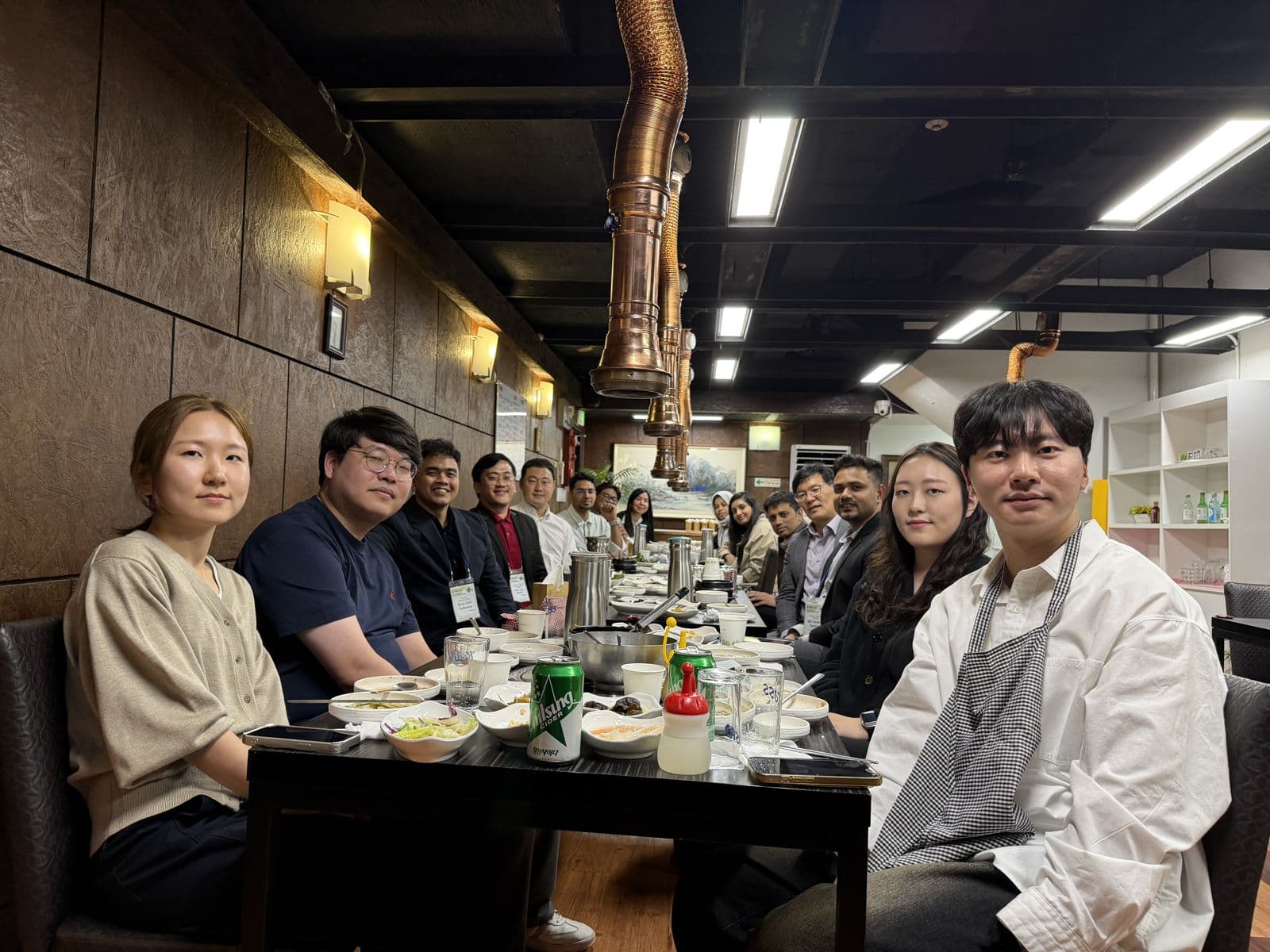
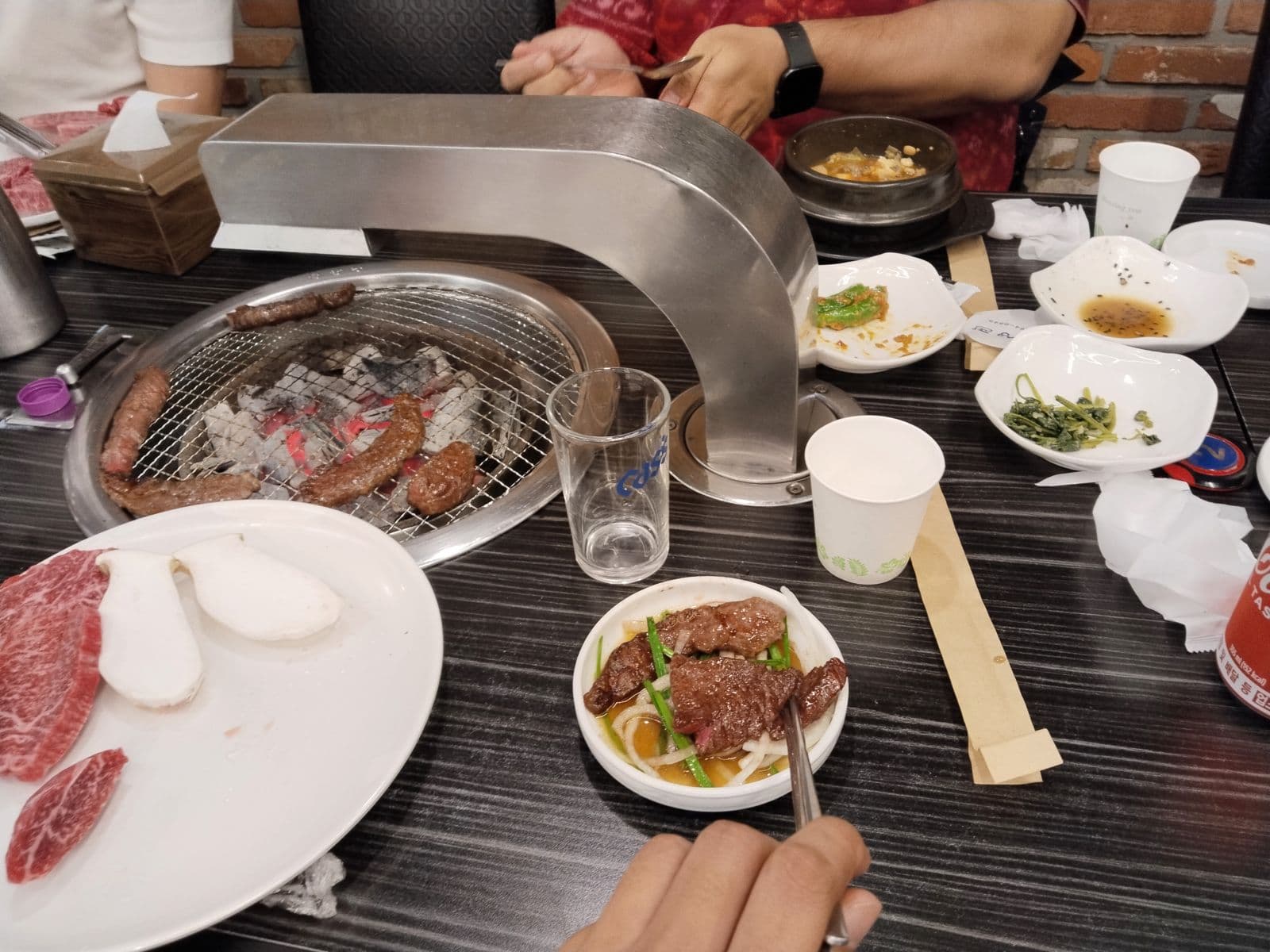
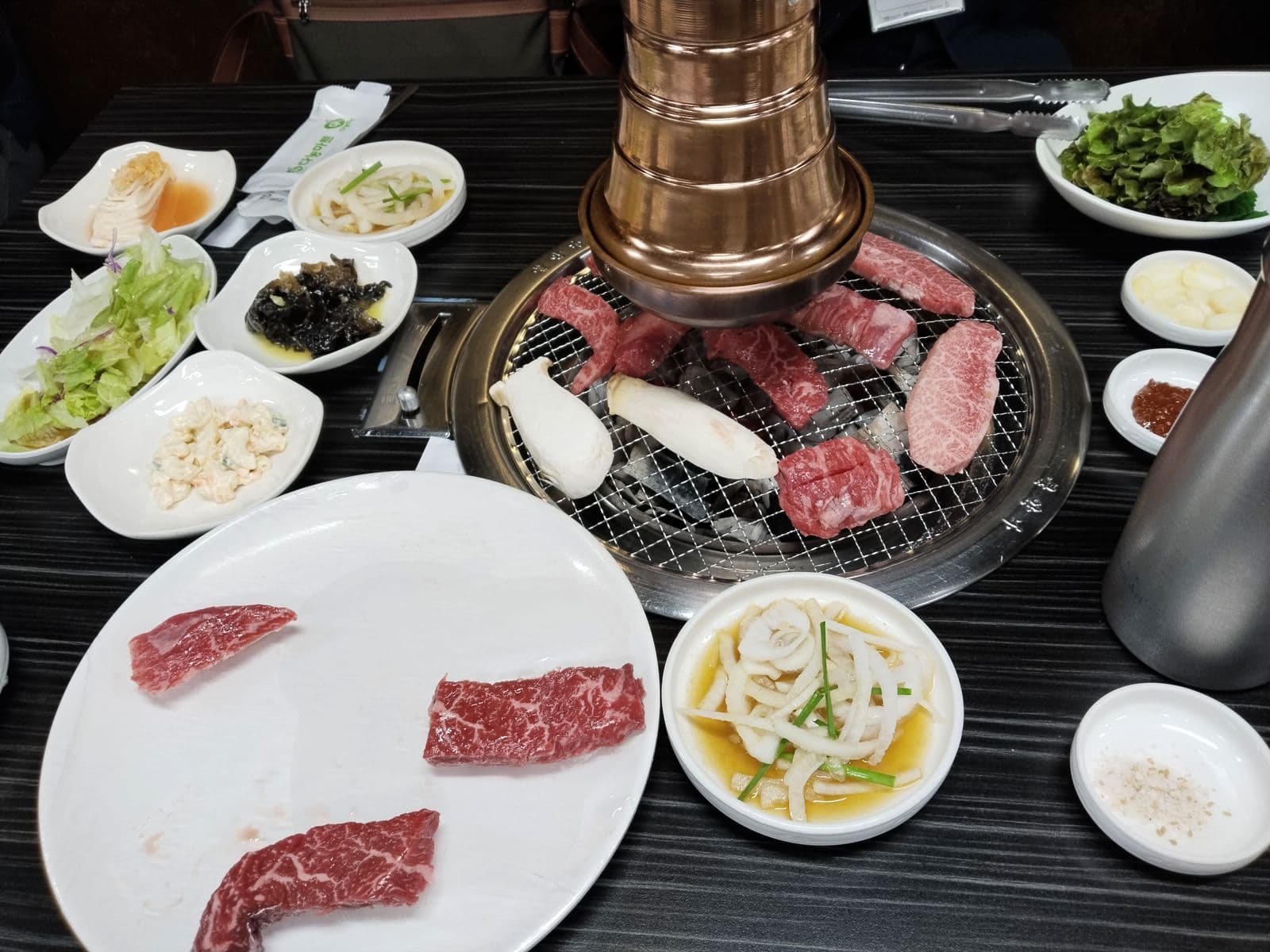
The first night, a group of speakers and organizers went out for Korean barbecue. We sat at a long table under copper exhaust pipes and talked, and it was the first time the week felt relaxed.
Korea outside the conference room
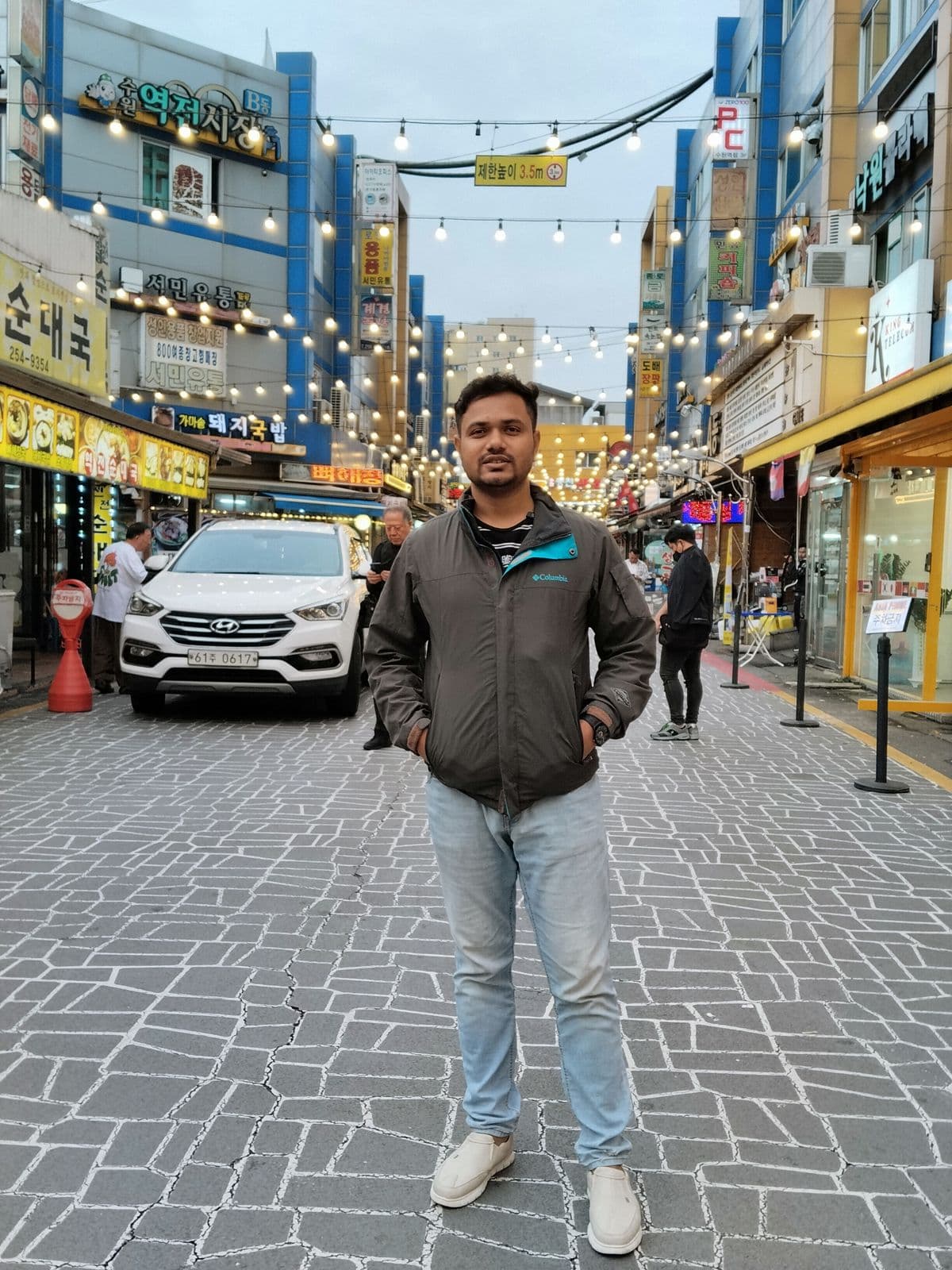
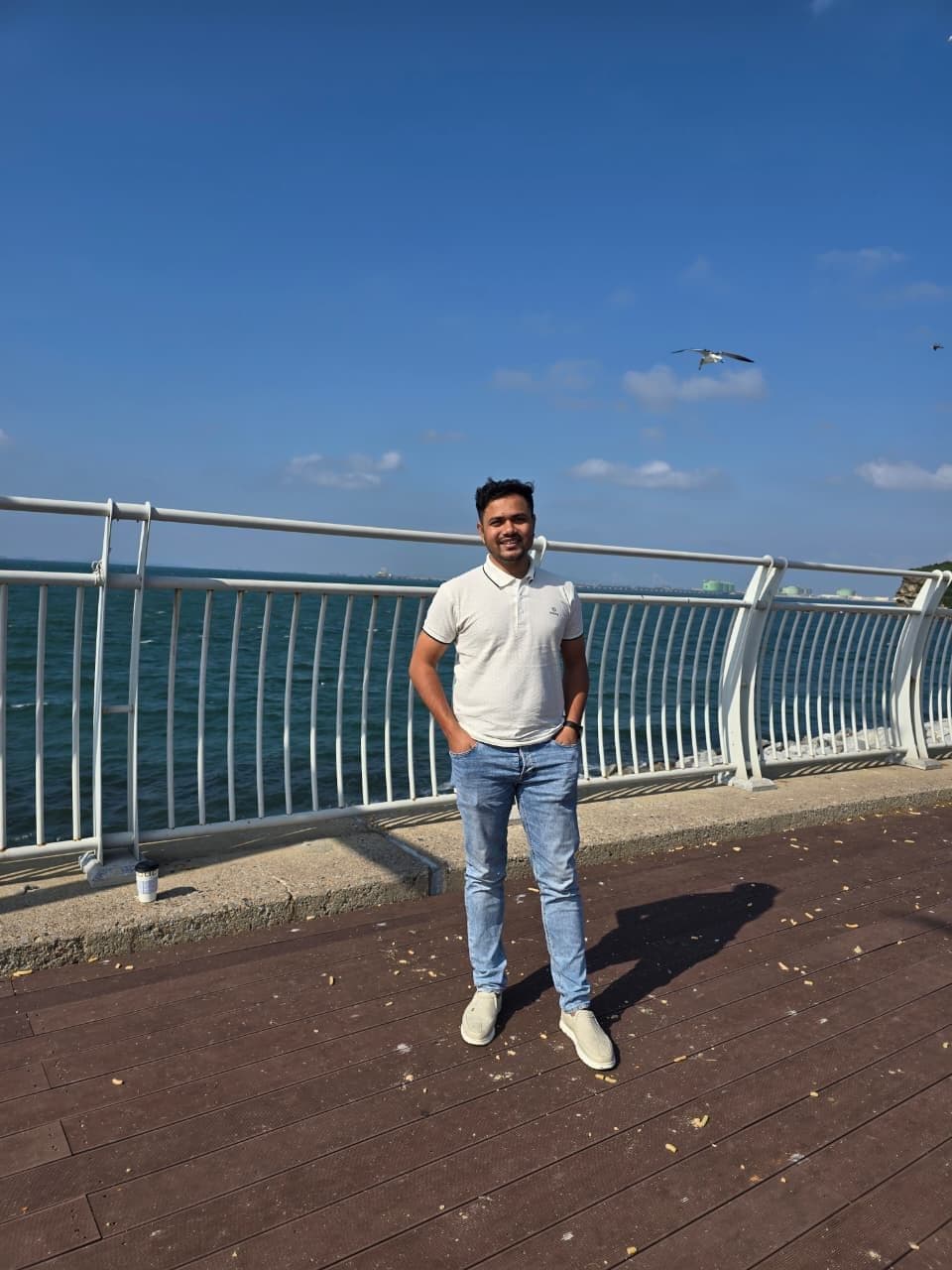
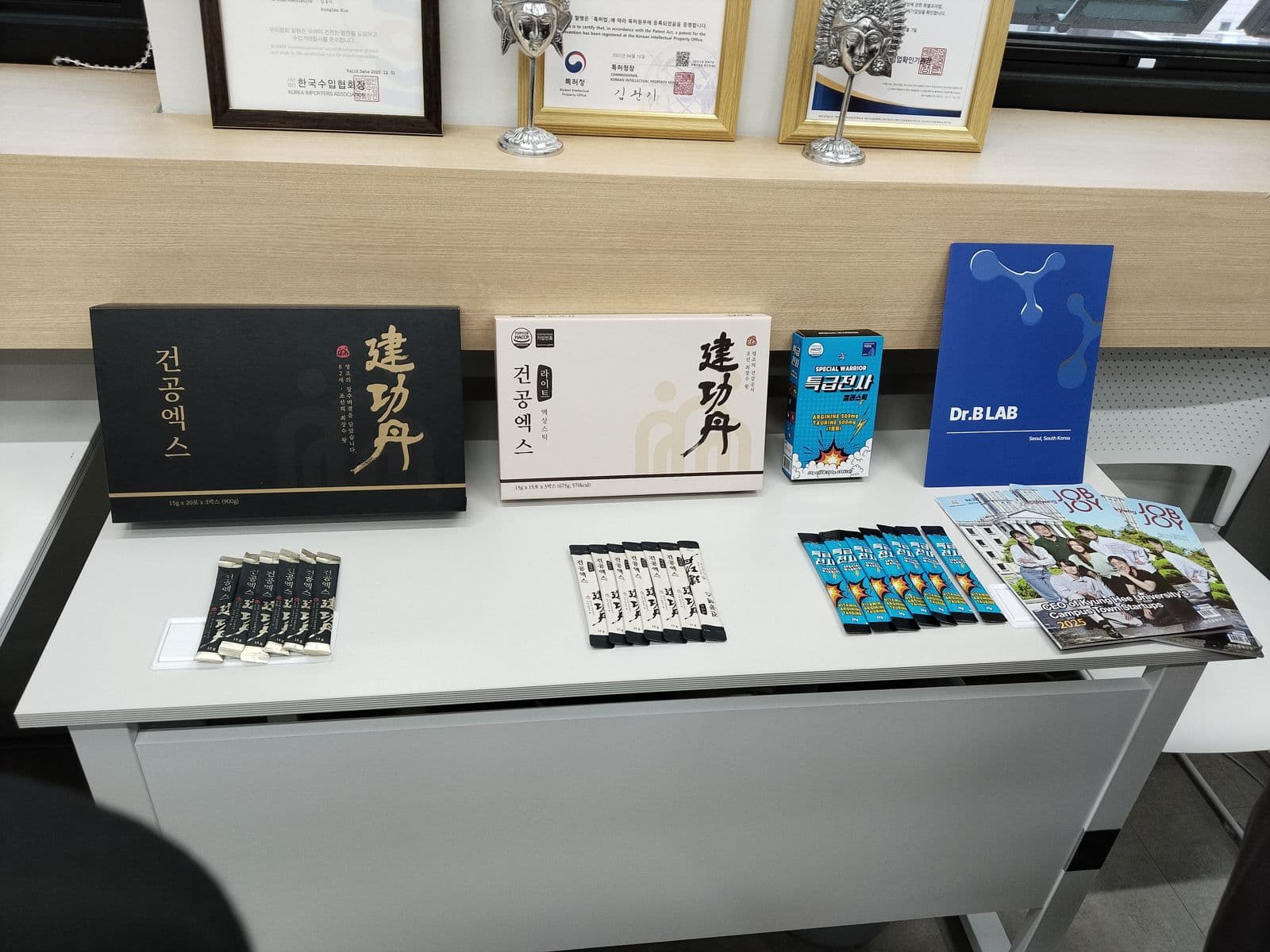
I tried to see a little of the country around the venue. I walked through the market street near Suwon, spent some time by the sea in Ansan, and visited the Seoul Bio Hub. In Professor Kim's lab I also saw a table of Dr.B LAB products, with his certificates on the shelf behind them. Seeing traditional medicine research next to an actual product line was new to me.
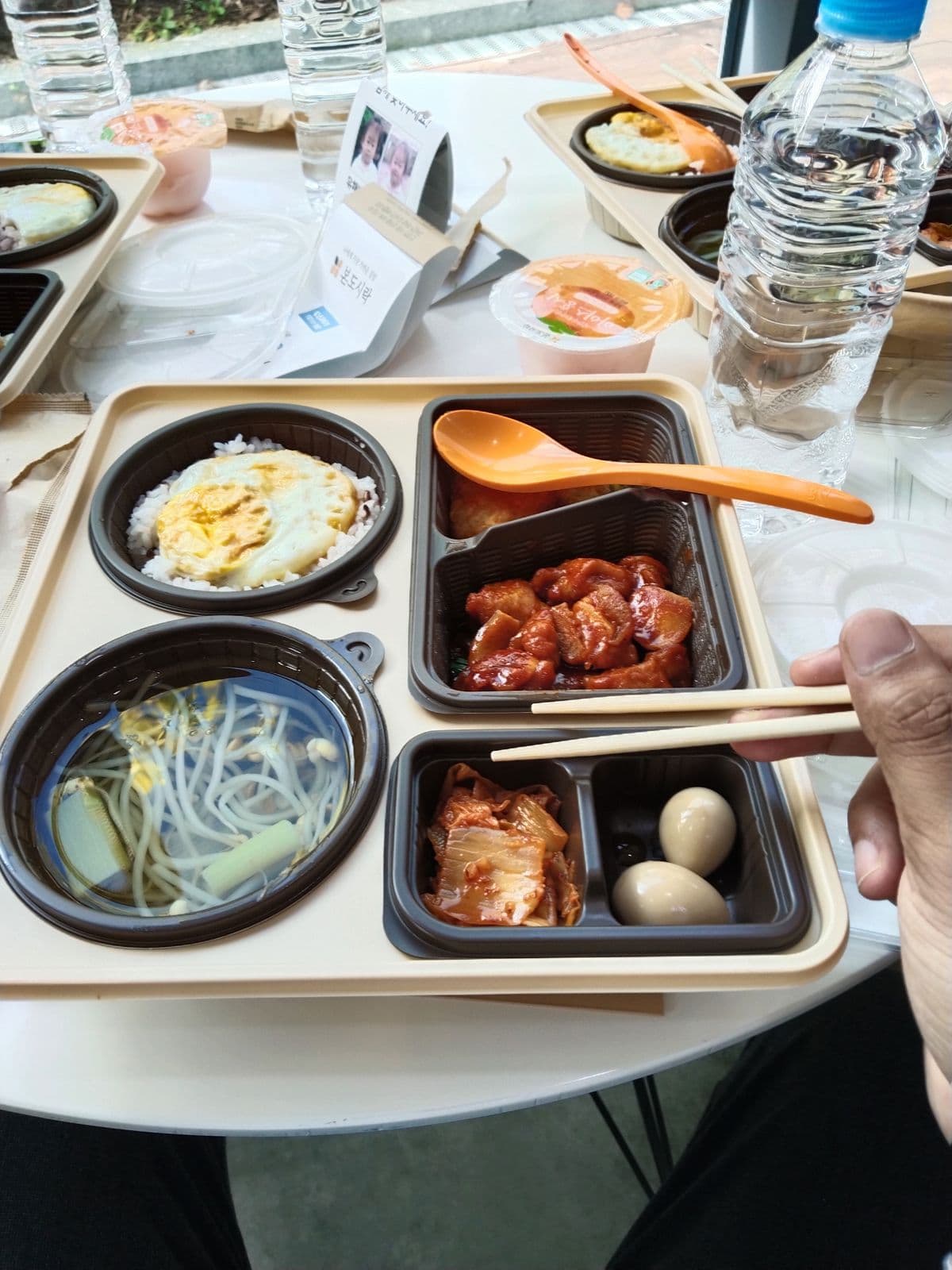
The food deserves a paragraph, because half my camera roll is food. Lunch at the venue came in a boxed set: rice with a fried egg, bean sprout soup, spicy chicken, kimchi and soy-braised eggs. The dinners were grilled beef cooked at the table over charcoal, with more side dishes than I could keep track of.
Dr. Hannan and the lab
I have worked with Dr. Hannan since 2020. The paper I presented in Korea comes from his lab: "Protective Mechanisms of Nootropic Herb Shankhpushpi (Convolvulus pluricaulis) against Dementia: Network Pharmacology and Computational Approach", published in Evidence-Based Complementary and Alternative Medicine in 2022 (doi.org/10.1155/2022/1015310). Shankhpushpi is one of the three plants on my slide, and the paper uses the same network pharmacology and computational approach as my talk. When the certificate was in my hands, I thought about that lab, because I did not get to that podium alone.
What I want to do next
Korea changed how I think about my next few years. The slide I want to build on is the one titled "Beyond a Single Plant": the pipeline should work on any traditional remedy, not just the three I showed. I want to take it to more plants and push the best candidates into experimental validation with partners who can run the wet lab side. I also want more international work. Before this trip I thought of conferences as places to present. Now I think of them as places to find the next collaborator, and I plan to attend more of them and to say yes sooner when someone asks me to speak.
If you work on natural products, network pharmacology or computational drug discovery and want to compare notes, get in touch through this site. I would like to hear from you.